Gessler's Taxation Policy
William Tell (P. G. Wodehouse Edition)Gessler's Taxation Policy is a sweeping system of levies imposed on the people of Switzerland under Austrian rule. By taxing livestock, food, and other ordinary goods, Hermann Gessler turns disputes over household expenses into a broader conflict over his authority; the Swiss people’s effort to obtain relief ends not in reform but in a call for rebellion.
Scope and Operation
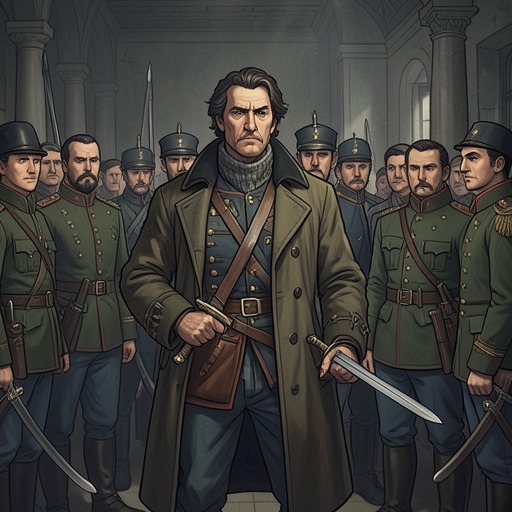
Hermann Gessler, appointed by the Emperor of Austria to govern Switzerland, seeks to tax everything he can think of. Sheep owners must pay him a sum, and a farmer who sells sheep and buys cows faces a higher tax on the cows. The levies also reach bread, biscuits, jam, buns, lemonade, and other goods. When representatives protest, the list includes taxes on sheep, cows, bread, and tea, illustrating how the policy touches both farming and everyday consumption.
The narration presents the Swiss people as thrifty and resistant to paying taxes of any kind, while Gessler insists on imposing them broadly. That disagreement gives the policy a double significance: it extracts money from ordinary economic activity, and it makes the Governor’s power visible in the details of daily life.
The Appeal and Its Outcome
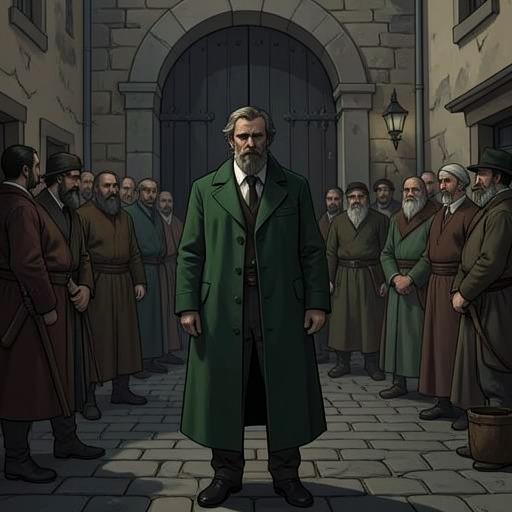
The Swiss people appoint Walter Furst, Werner Stauffacher, and Arnold of Melchthal to present their complaint. They visit Gessler on a morning in April and are received in the Hall of Audience. When asked what they want, Arnold explains that the taxes are too numerous. Gessler already knows the levies, but demands that the delegation get to the point rather than offering relief.
The audience becomes a performance of compliance rather than a negotiation. Gessler asks whether the representatives have changed their views and whether they still object to the sheep tax. Arnold says he no longer objects; when Gessler asks Walter and Werner the same, they agree as well. Gessler declares the matter settled, then requires a contribution to compensate the officials for granting the audience and an additional contribution from Arnold for the Imperial boiling oil. The request for tax relief thus yields no change to the policy, while the complainants are made to pay for the hearing itself.
From Tax Grievance to Revolt
After the delegation reports that Gessler will not reduce the taxes, Walter Furst draws the conclusion that rebellion is necessary. The policy is therefore part of the immediate political background to the uprising: a grievance presented through formal petition becomes an explicit call to resist the Governor’s rule.
The account of the revolt places the tax dispute within a longer period of opposition. Fear of Gessler had held back an uprising that had been brewing for a long time, while the people were bound by an oath to drive the enemy from the country. When news arrives that Gessler has been killed, meetings are held in towns across Switzerland and the revolution begins without delay. The fortresses he built during his rule are taken by assault in a single night, linking his years of government—and the burdens imposed under it—to the structures the revolt overturns.
The Policy’s Unresolved Legacy
The book does not end by claiming that the revolt abolished taxation. Its closing correction is that the taxes are not abolished. This qualification sharply limits what the uprising changes: Gessler’s death signals a political rising and his fortresses fall, but the final joke leaves the fiscal burden in place. The policy remains both a concrete source of popular grievance and the object of the narrative’s irony, which distinguishes the overthrow of a governor from the removal of the taxes themselves.